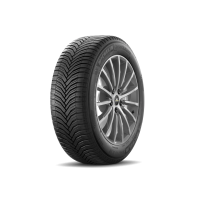
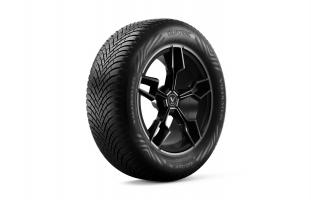
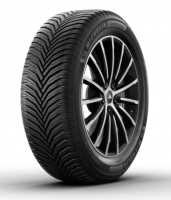
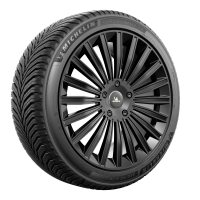
Michelin CrossClimate+
MirarEn febrero de 2017, Michelin lanzó MICHELIN CrossClimate+, que continuará combinando lo mejor de los neumáticos de verano e invierno con un rendimiento duradero.
Todas las Pruebas
Ver resultados de la prueba
Neumáticos Alternativos
| Size | Fuel | Wet | Noise |
|---|---|---|---|
| 14 pulgada | |||
| 185/60R14 86 H XL | C | C | 68 |
| 165/70R14 85 T XL | D | C | 68 |
| 175/65R14 86 H XL | C | C | 68 |
| 15 pulgada | |||
| 185/65R15 92 T XL | C | B | 68 |
| 195/55R15 89 V XL | C | B | 69 |
| 195/65R15 91 H | C | B | 69 |
| 185/65R15 92 V XL | C | B | 68 |
| 195/65R15 95 V XL | C | B | 69 |
| 16 pulgada | |||
| 205/60R16 96 H XL | C | B | 69 |
| 205/60R16 96 V XL | C | B | 69 |
| 205/55R16 94 V XL | C | B | 69 |
| 205/55R16 91 H | C | B | 69 |
| 215/60R16 99 V XL | B | B | 69 |
| 205/60R16 96 W XL | D | B | 69 |
| 17 pulgada | |||
| 215/55R17 98 W XL | C | B | 69 |
| 225/50R17 98 V XL | C | B | 69 |
| 225/50R17 98 W XL | D | B | 69 |
| 215/45R17 91 W XL | C | B | 69 |
| 215/55R17 94 V | C | B | 69 |
| 225/60R17 103 V XL | B | B | 69 |
| 205/50R17 93 W XL | C | B | 69 |
| 225/45R17 94 W XL | C | B | 69 |
| 18 pulgada | |||
| 245/45R18 96 Y | C | B | 71 |
| 255/35R18 94 Y XL | C | B | 71 |
| 225/40R18 92 Y XL | C | B | 69 |
| 245/40R18 97 Y XL | C | B | 69 |
| 245/45R18 100 Y XL | C | B | 69 |
| 225/40R18 92 Y XL | D | B | 71 |
Preguntas y respuestas para el Michelin CrossClimate Plus
Hacer una preguntaI am considering buying a set of Crossclimates for my Jaguar - the size is 225/60 16 102W. Discovering the tyre is about to be replaced by the Crossclimate+ is making me hesitate! Michelin introduced the original Crossclimate in a fairly narrow set of sizes - my 225/60 16 was not one of them. Is Michelin likely to do the same thing with the new Crossclimate+ - with the slightly less popular tyre sizes like mine being introduced later - in which case I should just go ahead and order the original Crossclimate, rather than wait for the Crossclimate+? Does anyone know how Michelin has improved the tyre? - Is the new tyre a better compromise (better warm dry braking and handling) or is it less fundamental tweaking?
I am considering buying either 4 Michelin CC Plus or Goodyear Eagle Asymmetrical 3 for my Jag XF 2.2, tyre size 245/45/R18. I live in semi rural Wales just outside Cardiff and although I probably wont be exceeding 10,000 miles a year, I will be driving around the welsh valleys on A and B roads with my new job more than I have previously when I used to catch a train more often than not. Its the million dollar question of whether to pay for winter tyres or just a good quality summer tyre and now we have the option of an all-season/ weather tyre. I don't do any high performance driving etc. We are yet to have another harsh winter since 2012 but no doubt this year will be the year. I was after some advice on the suitability of these two tyres for my car and driving situation as a good all rounders but being able to handle a cold snap should it arrive. Also whether I could realistically consider a slightly cheaper tyre that would fit the bill? Thanks There is a £30 difference in price on blackcircles.com
Can someone please help me to decide between 91H and 94V XL. I am going to get 4 of Michelin cross climate plus tyres in 205/55 R16 tyres for Mercedes B160 Sport. The current factory fitted tyres are 215/40 R18 89W XL contis.As I already had 16" wheels with winter tyres so I decided to go with cross climates instead of changing wheels and tyres twice a year. Now I am struggling to decide that should I get the specified speed and load rating of 91H with softer sidewalls or should I go with 94V XL with stronger sidewall. I don't mind paying little bit extra if there is any benefit. So can someone please help.
are these run flat tyres
I would love a set of CrossClimate+ on my car for a hustle free UK driving but iv got an 19" alloy with 225/40. They seem to produce at least one tyre in 19" but its a 255 and surely if they produce one they will produce others... My question is do they have other 19" sizes? Are they just unavailable atm?
I live in Yorkshire and drive an M140i. I am considering the CrossClimate+ as my only tyre but not sure if this is too much of a compromise in the summer? The car currently has Pilot Super Sports. Price is not important but driving enjoyment and safety all year round is.
Can you tell me what the thread depth is on the New Michelin CROSSCLIMATE SUV car tires?
I am looking at getting some new tyres for my car for winter would you say the Michelin crossclimate+ will be good for using all year or I can get another set of wheels for winter use for not that much money and put the cross climates on those to just use in the winter. I currently have Michelin summer tyres that need replacing anyway. I am a tyre fitter anyway so fitting isn’t a problem and can always swap wheels easily. What sort of difference would we feel in dry summer conditions with the cross climate.
I am delighted with the review in Finland of TYREREVIEWS, and I am running low on rubber on the front axle on my C class , w204, 225/45/ 17" . I am moving from Oxford to Norwich this summer, and when the fall hits us, I am wondering if the Michellin CC+ are still a good allrounder for the temperature changes, as that area seems to be drier than where I have lived until now?
Hacer una pregunta
Nunca publicaremos ni compartiremos tu dirección de correo electrónico
Resumen de la revisión
Residencia en 106 opiniones de usuarios
La mayoría de los conductores valoran muy positivamente el Michelin CrossClimate Plus por su rendimiento confiable en cualquier clima, su larga vida útil, su bajo nivel de ruido y comodidad, y su excelente agarre en seco y aceptable en mojado. Muchos elogian su capacidad para nieve en inviernos moderados. Una minoría menciona inconvenientes como una resistencia media al tomar curvas en mojado y al aquaplaning, algunas quejas sobre el ruido y la conducción en ciertos vehículos y una menor deportividad. La opinión general es muy positiva, dada la alta proporción de más del 80% de reseñas.
Fortalezas
- Vida útil/durabilidad de la banda de rodadura
- Agarre y frenado en seco
- Capacidad para invierno/nieve en condiciones suaves
- Comodidad de conducción y bajo nivel de ruido para muchos usuarios
- Confianza general
- Valor al considerar la longevidad
Áreas de mejora
- Preocupaciones por las curvas mojadas/aquaplaning
- Mayor ruido o conducción brusca en algunos vehículos
- Dirección/respuesta menos deportiva
Top 3 Michelin CrossClimate Plus Reseñas
Latest Michelin CrossClimate Plus Reseñas
El MX-5 es un automóvil liviano que pesa aproximadamente 1 tonelada y 140 hp con el cambio de motor VVT con diferencial abierto, lo que hizo que girar la rueda trasera motriz fuera relativamente fácil para los presupuestos originales del propietario anterior. Con el CC+ instalado, tuve que pisar el embrague intencionalmente para que la rueda patinara. Solo cuando conducía en frío (
VENTAJAS:
- respuesta/manejo seco - Puedo superar con creces el límite de velocidad fuera de las ciudades (se desliza por las curvas a 120 km/h incluso ahora); sientes un 'borde' pronunciado al girar a alta velocidad sintiendo el límite
- Agarre maestro en nieve: fui por una calle que no estaba limpia y aceleré y frené bruscamente, moviendo el volante de izquierda a derecha; lo mejor que obtuve fue un subviraje suave, un neumático MUY seguro sobre nieve
- Desgaste. Recién pasé la inspección y registro. Todavía se sienten un 90 % como cuando eran nuevos. Es increíble. La inspección visual muestra que los frentes están un poco más desgastados (motor diésel con mucho torque).
- Teniendo en cuenta el uso, realmente tienen una excelente relación calidad-precio. Aunque al principio eran un poco más caras, con el tiempo todo se va compensando.
CONTRAS:
- El rendimiento en mojado es excelente en línea recta (aquaplaning, etc.) pero es promedio en el mejor de los casos en curvas cerradas; una vez subviré hacia un carril entrante a 35 km/h en una curva cerrada durante un día lluvioso.
- El CC2 se ha excedido en el agarre en la nieve, lo que me dificulta recomendar el modelo actual.
Sin embargo, dado que los neumáticos de invierno deberían tener al menos 4 mm, ahora están casi listos para ser neumáticos de invierno "certificados". Y para ser justos, los he estado exigiendo un poco más durante los últimos 5000 km que antes, por lo que probablemente los he desgastado un poco más de lo normal durante toda su vida útil.
De todos modos, lo curioso es que si a partir de ahora los utilizara sólo como neumáticos de verano, ¡probablemente durarían todavía unos 20-30 000 km!
No lo haré, pero aún así es bastante sorprendente.
En general, estos neumáticos nunca me han decepcionado y son realmente impresionantes. Tienen buen agarre en todas las condiciones y nunca me han sorprendido. Los he conducido por toda Europa: en verano, a toda velocidad, por autopistas, en muchos viajes diarios por la ciudad, ocasionalmente en carreteras de montaña nevadas, en medio de muchas tormentas torrenciales, en caminos fríos, fangosos, nevados, etc.
En general, probablemente sean los mejores neumáticos que he tenido, y he tenido bastantes.
Dado que la mayoría de las reseñas afirman que los neumáticos Crossclimate 2 están más adaptados a la nieve que estos (que no necesito), probablemente buscaré otra alternativa de marca, ¡pero me quito el sombrero ante Michelin por el Crossclimate Plus!

Excelente comportamiento en curvas y frenado en seco.
Muy bueno en nieve y hielo.
Incluso con una conducción ocasionalmente más rápida, los neumáticos han durado más de 20.000 millas y todavía les queda entre 3/4 mm de banda de rodadura.
Contras:
No funciona especialmente bien bajo la lluvia. El agua estancada hace que el coche se mueva mucho. Sin embargo, se siente que tiene el control al soltar el acelerador mientras reduce la velocidad.
No necesitaba neumáticos para todas las estaciones, ya que vivo en East Anglia, donde rara vez nieva en invierno, pero cuando nieva, los Michelin demostraron ser más que suficientes para la tarea. El agarre en seco y en mojado siempre ha estado asegurado, y el desgaste es bajo, de aproximadamente 1,0 a 1,5 mm después de 10.000 millas de conducción mixta. Vale la pena pagar más que los neumáticos de verano por la seguridad adicional en condiciones de frío, así como por el bajo índice de desgaste sin la penalización que tienen algunos neumáticos en términos de firmeza y ruido. Incluso mejor si se tiene en cuenta que había reducido el tamaño de los neumáticos.
Consideraría seriamente comprar la versión actualizada de estos neumáticos la próxima vez, si el coche dura tanto (ahora tiene 17,5 años), lo que podría suponer otros 5 o 6 años o más de 25 000 millas si el índice de desgaste se mantiene. Tenga en cuenta que, a modo de comparación, ya he enumerado mis dos juegos de neumáticos anteriores (los Dunlop [excelentes] y los Bridgestone ER30 OEM [malos]).